Review and Apply Google Ads Recommendations
Search Architecture & Discoverability Optimization
Search Architecture | Search Visibility | Search Intent Analysis | Optimization Strategy
This project focused on evaluating search optimization recommendations and determining which improvements should be implemented, planned, or deferred based on visibility objectives, user intent alignment, discoverability goals, and long-term search performance considerations.
The analysis examined optimization opportunities related to search visibility, keyword relevance, content accessibility, user engagement signals, and performance enhancement to support structured search architecture decision-making.
Project Objective
The objective was to assess optimization recommendations, evaluate their potential impact on search visibility and user engagement, and establish an implementation roadmap that supports discoverability, relevance, and sustainable search growth.
Optimization Scenario
The review focused on identifying opportunities to improve visibility, user interaction, search relevance, and content discoverability. Recommendations were evaluated against performance goals, implementation requirements, and expected contribution to search effectiveness.
Evaluation Methodology
Each recommendation was reviewed according to search relevance, visibility impact, implementation complexity, user experience considerations, and alignment with search architecture objectives. Recommendations were categorized according to priority and expected performance contribution.
Figure: Search Optimization Recommendation Review Matrix
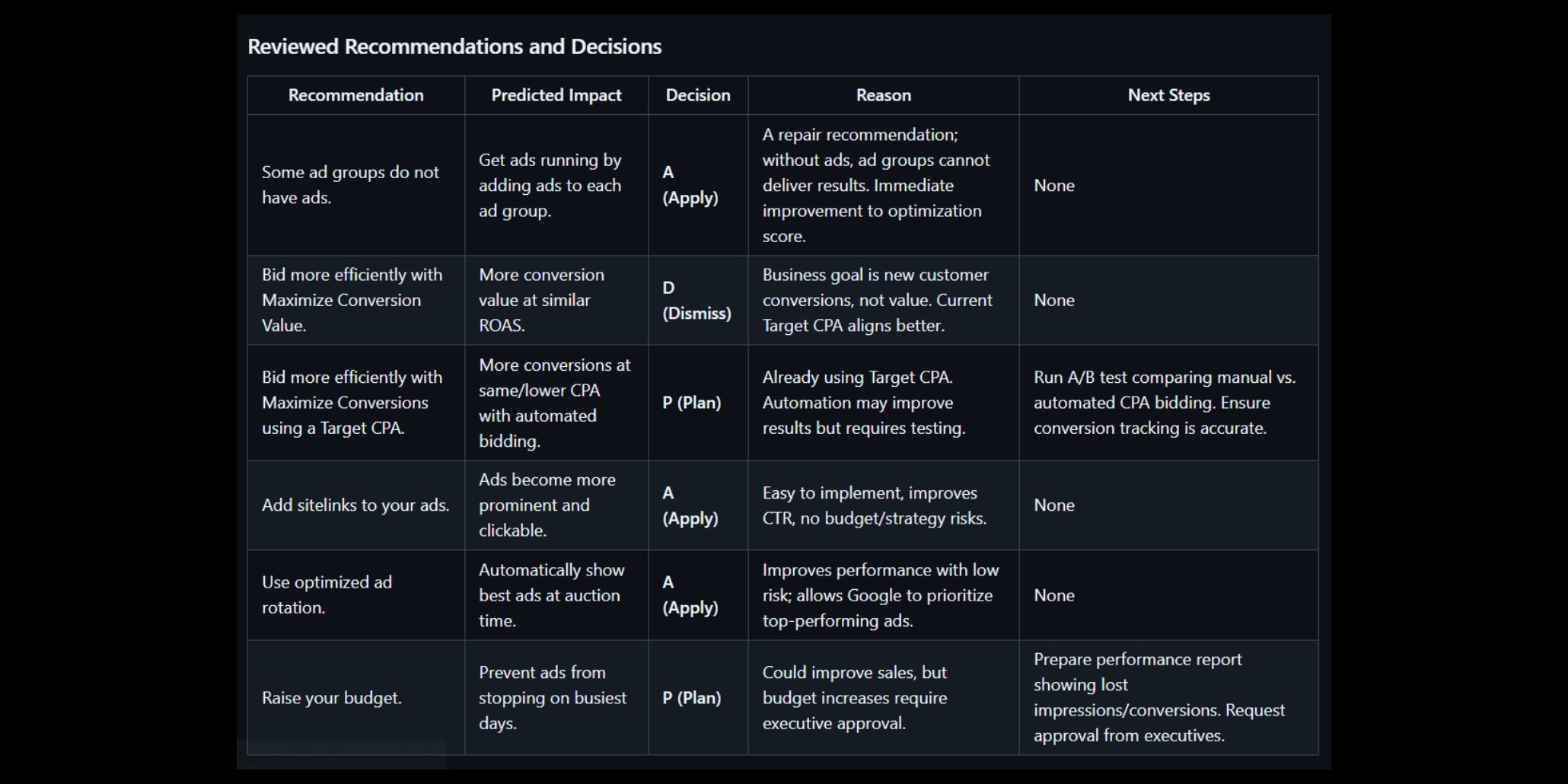
The review matrix documents optimization opportunities, expected outcomes, implementation priorities, supporting rationale, and future improvement considerations.
Optimization Areas Evaluated
- Search visibility enhancement opportunities.
- Content discoverability improvements.
- User engagement optimization recommendations.
- Search relevance and intent alignment.
- Navigation and accessibility considerations.
- Performance-focused enhancement opportunities.
Decision Summary
- Prioritized recommendations with immediate visibility benefits.
- Planned phased implementation for recommendations requiring additional validation.
- Identified opportunities for future performance testing and refinement.
- Deferred recommendations that did not align with current search objectives.
Key Findings
- Optimization recommendations should support discoverability and user intent alignment.
- Search visibility improvements often deliver cumulative long-term value.
- Low-complexity enhancements can provide meaningful performance gains.
- Search relevance and content accessibility remain critical visibility factors.
- Structured evaluation improves prioritization and implementation decisions.
Project Impact
This project demonstrates practical application of search visibility analysis, search intent evaluation, discoverability optimization, performance assessment, and structured decision-making methodologies.
The review process highlights the importance of evaluating optimization opportunities against user intent, search relevance, content accessibility, and long-term visibility objectives before implementation.
Supporting Documents & References
Search Optimization Recommendations Review – Project Documentation
Search Visibility & Optimization Strategy – Supporting Resource
Future Opportunities
Future optimization efforts should include expanding keyword coverage, refining search intent targeting, improving content alignment, monitoring visibility trends, and continuously evaluating performance opportunities through search data analysis.
Regular optimization reviews can help maintain alignment between search objectives, user expectations, discoverability requirements, and evolving search behavior patterns.
Project Conclusion
The review process identified multiple opportunities to strengthen search visibility, improve discoverability, and enhance user engagement through structured optimization planning.
This project demonstrates a systematic approach to search architecture optimization, helping improve relevance, visibility, content accessibility, and long-term search performance through evidence-based decision-making.
Google Digital Marketing & E-commerce Implementation Project: © 2022 Google LLC. Google and the Google logo are trademarks of Google LLC. Other names may be trademarks of their respective companies.